


























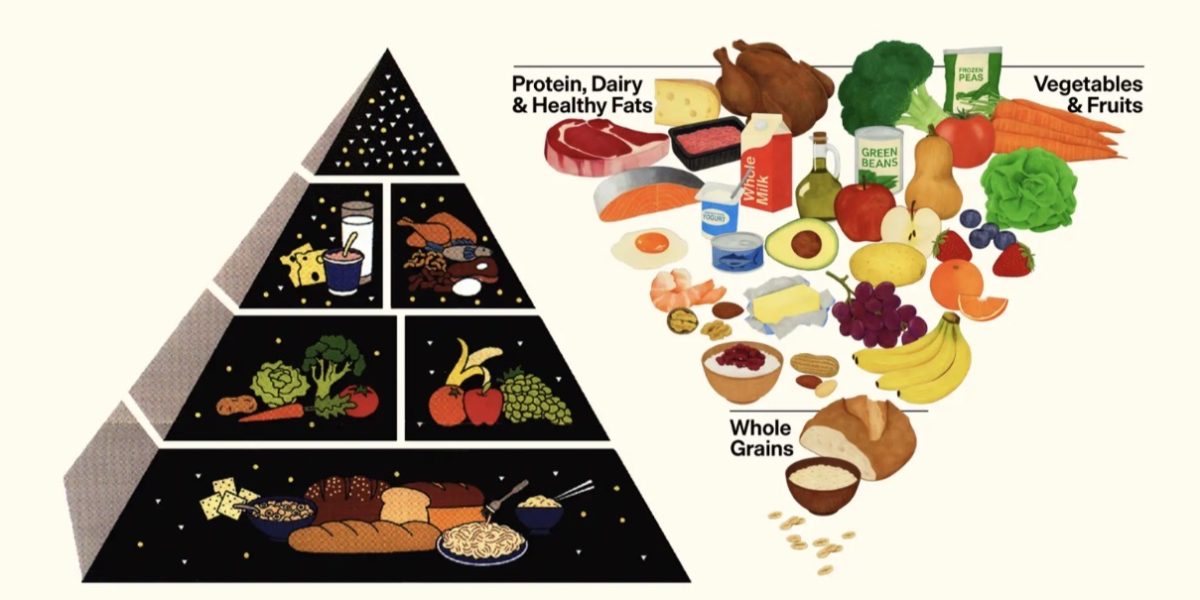
A new food pyramid was recently released by the United States Department of Agriculture, updating national nutrition guidance for Americans. The new design focuses on these main things Protein, Dairy & Healthy Fats, Vegetables & Fruits, and Whole Grains. Instead of showing food in strict levels like older pyramids, this version groups foods by type and encourages balance across all categories.
One of the biggest parts of the new pyramid is the large section for vegetables and fruits. This shows that produce should make up a major part of daily meals. In schools, this could mean students will see more fruits and vegetables offered each day. Lunch trays may include a greater variety of fresh, frozen, or canned options such as carrots, broccoli, apples, berries, or leafy greens.
The pyramid also highlights protein, dairy, and healthy fats together. This includes foods like chicken, fish, eggs, milk, yogurt, nuts, and oils. Because of this update, school lunches may include more lean protein choices and balanced dairy options. Students might also notice more plant-based proteins like beans or lentils being added to menus.
Whole grains form the base of the pyramid. Foods like whole wheat bread, brown rice, oatmeal, and whole grain pasta are emphasized. As a result, schools may continue replacing refined grains with whole grain versions. Sandwich bread, pizza crust, and pasta served in the cafeteria could more often be made with whole grains.
Since public schools follow and base their meals directly off of this, it will most definitely impact and change our school lunches here at frederick high school and in the st vrain valley school district. While changes may happen gradually, students can expect lunches to reflect the structure of the new food pyramid. The goal is to provide balanced meals that include fruits and vegetables, quality proteins, dairy, healthy fats, and whole grains in every school’s student’s diet.
This is the new food pyramid with the in depth recommendations top help your health.
The old food pyramid placed bread, cereal, rice, and pasta at the base of the American diet, recommending six to 11 servings of grains per day. Fruits and vegetables formed the next tier, followed by dairy and protein sources like meat and beans, while fats and sweets were positioned sparingly at the top. The pyramid became one of the most recognizable nutrition graphics in the country, shaping school lunch programs, public health campaigns, and household eating habits for more than a decade.