













In the words of Peggy Hill in 1998, “The day after Thanksgiving is, in my opinion, the biggest shopping day of the year.”
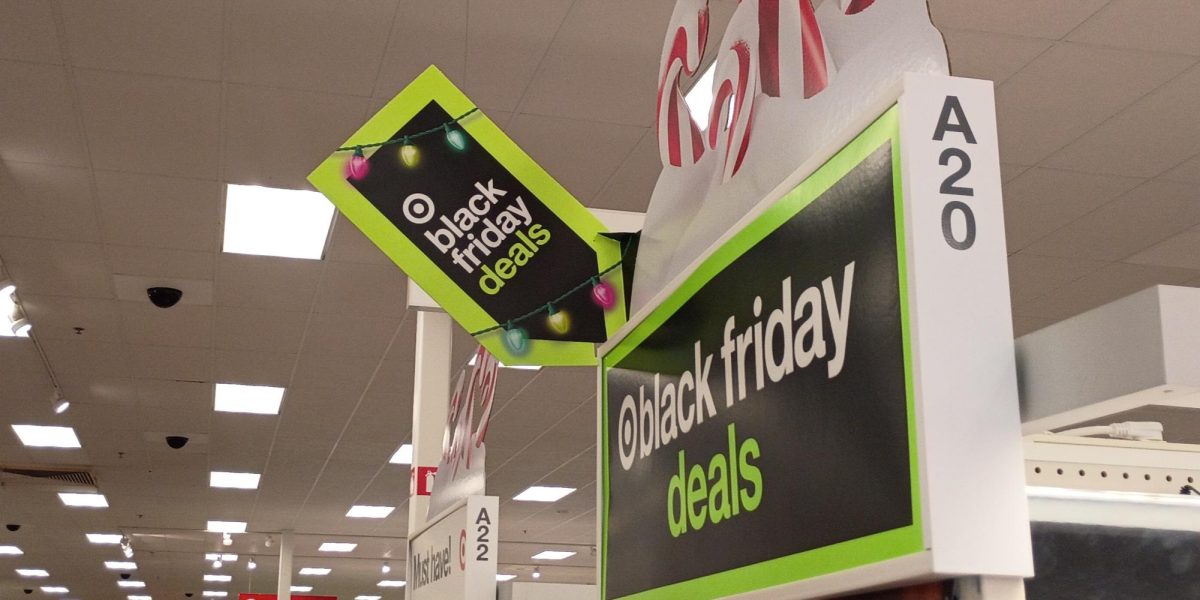
The day after Thanksgiving once was the largest shopping day of the year, as Americans used what for most of them was a day off to buy their Christmas gifts. The “holiday” became known to the general public as Black Friday, a day for early morning store openings, chaotic crowds, and great deals.
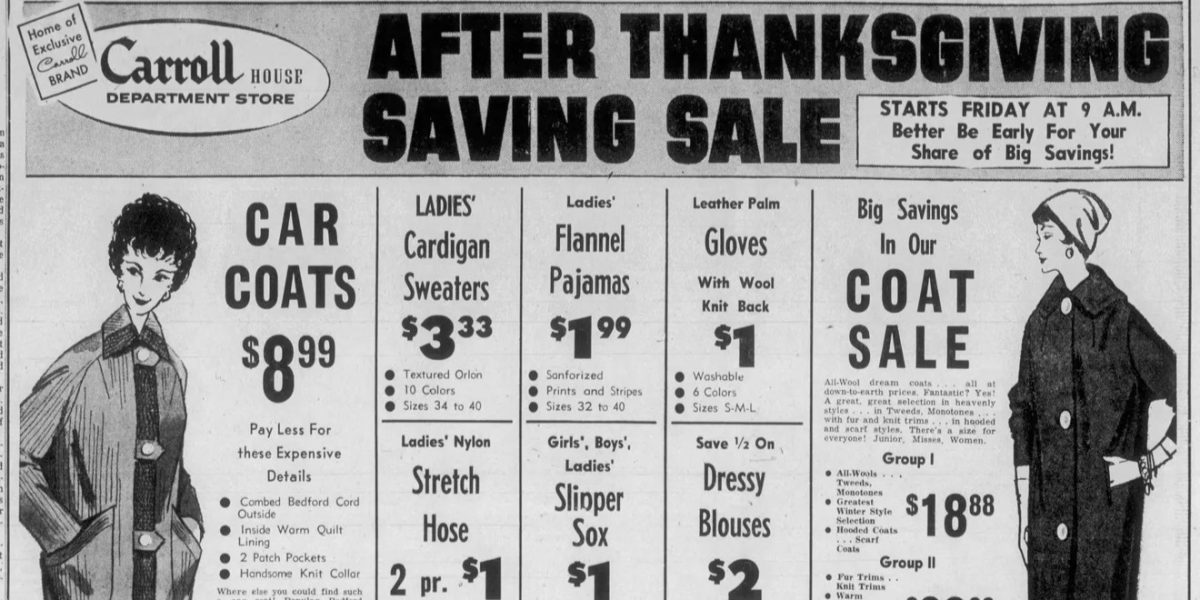
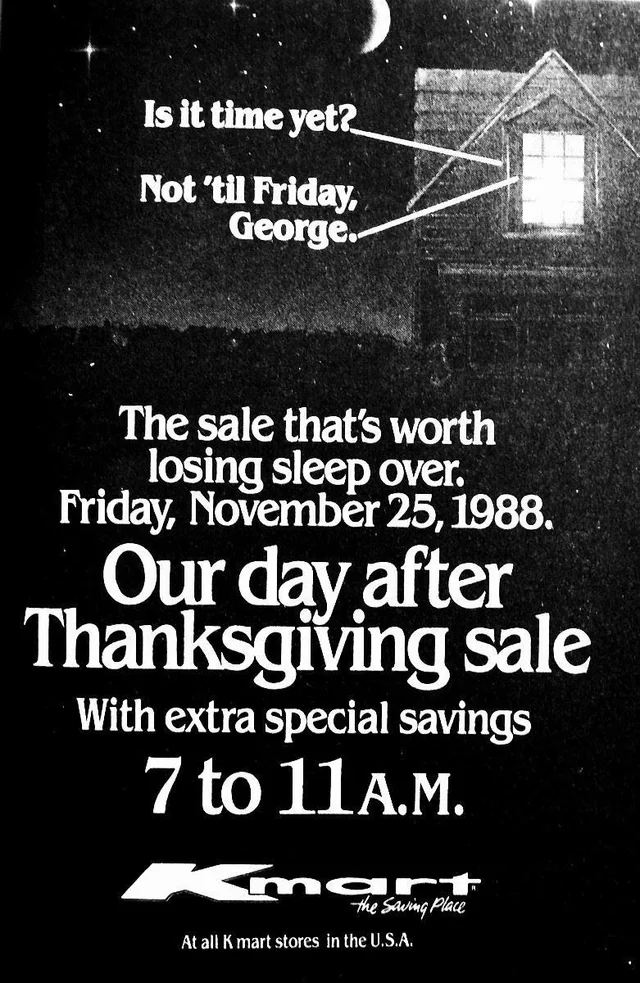
To those who love shopping, however, Black Friday was Christmas before Christmas. The hunt for the best sales and racing others to nab an item before it was gone was the best thing in November. Newspapers would sell out on Thanksgiving, as every store had thick, multicolored ads for their Friday sales. Lines wrapped around buildings in anticipation of a 3 a.m. or 4 a.m. doorbuster opening. Some shoppers would even camp out in front of stores on Thanksgiving as soon as their turkey was carved.
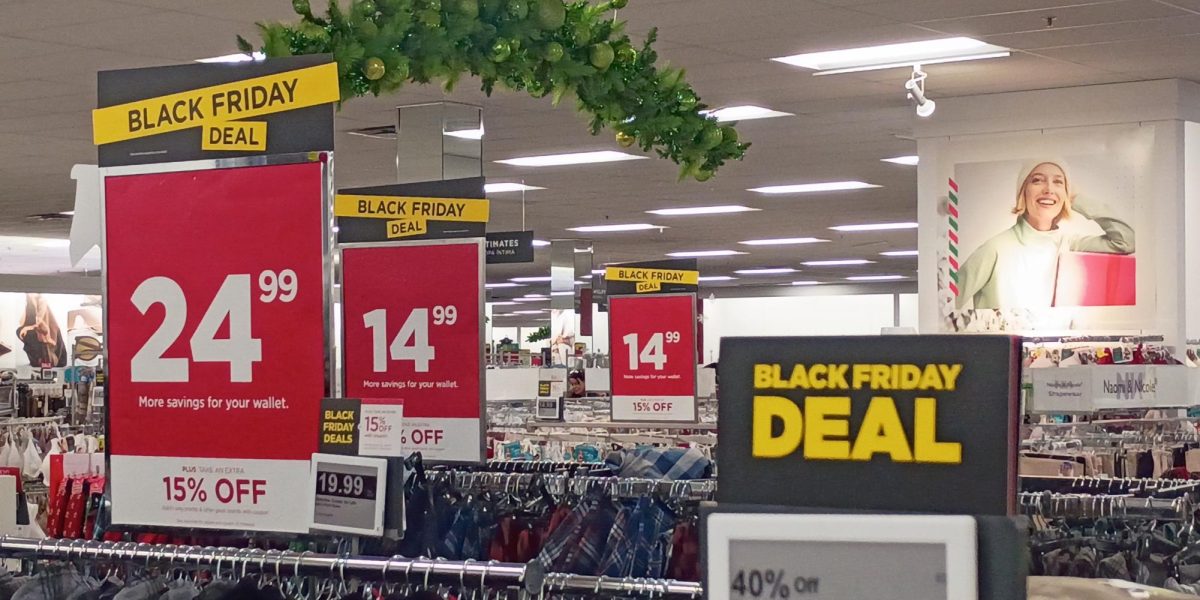
Fast forward to this year: the biggest retailers, like Target, Walmart, and Best Buy, all open at 6 a.m., a mere two hours before most would normally open on a Friday. The rest all open at their normal time with the exception of rival department stores J.C. Penney’s and Kohl’s, which will kick off shopping at 5 a.m. Lines outside stores will be minimal, and if a shopper can’t get their discount deal in time, that’s okay—the product can be price matched and delivered to their house anytime this holiday season.
Something changed in the 27 years between Peggy Hill and now. Black Friday is a shadow of what it once was, and if greedy retailers aren’t careful, it could disappear forever.
Back in Black: What Black Friday Used to Be
While it’s no longer taboo to see Christmas decorations start appearing on store shelves while Halloween pumpkins are still on porches, retailers used to be very strict about respecting holiday seasons. They would not start their holiday ads or sell Christmas-themed products until the day after Thanksgiving. This was such an established norm that retailers pushed President Franklin Roosevelt to move Thanksgiving up a week to the fourth Thursday of November instead of the last Thursday in November so they could have an extra week of sales in 1939.
Since these traditions meant the day after Thanksgiving was always the first day of “holiday” shopping, US stores have always seen increased traffic on that day. Still, there were no giant sales or lines outside most stores. Back then, the most sought-after items weren’t electronics but strings of lights from hardware stores and winter coats from department stores. The modern Black Friday evolved from this thanks to another Thanksgiving tradition: football.
The term “Black Friday” first showed up in the 1950s; surprisingly, it was initially heard from police, not retailers. Philadelphia law enforcement started to call the day after Thanksgiving Black Friday because no officer wanted to work that day. The city would be flooded with chaotic out-of-town crowds in advance of the annual Army-Navy football game, which inevitably led to a rise in shoplifting and police working extra-long hours.
Fed-up retailers decided to fight the thieves by minimizing the number of items in their stores on Black Friday—after all, less in store means less to steal. They noticed that the strategy worked well—in fact, they began to sell out of all their displayed inventory on Black Friday, and shoppers, not shoplifters, started coming in as soon as the store opened to ensure what they wanted to buy didn’t run out.
As the 1970s recession gave way to the prosperity of the 1980s, Black Friday started becoming an event for Philadelphia retailers, who started opening earlier and discounting items to undercut other stores. Word also spread of the Black Friday phenomenon, and retailers in other cities turned their local day-after-Thanksgiving sales into their own Black Friday events. By 1993, Black Friday overtook Christmas Day as the busiest shopping day of the year.
Fade to Black: The Decline of Black Friday
The late 1990s and 2000s were the peak years of Black Friday. By 2000, the holiday had spread over to Canada despite the country celebrating their own Thanksgiving in October. As the internet age began, electronics replaced clothing as the biggest driver of Black Friday sales—stores would get the latest version of a computer, webcam, TV, or other item and use Black Friday to deeply discount the previous year’s version and get it out of their inventory.
Big box retailers like Walmart, Target, and Best Buy started to outpace Macy’s, J.C. Penney’s, and other department stores in sales. To stay competitive, stores started opening earlier and earlier. In 2010, Toys ‘R’ Us became the first retailer to open all their stores on Thanksgiving Day nationwide, and despite consumer protest, this trend became standard among bix box retailers just five years later.
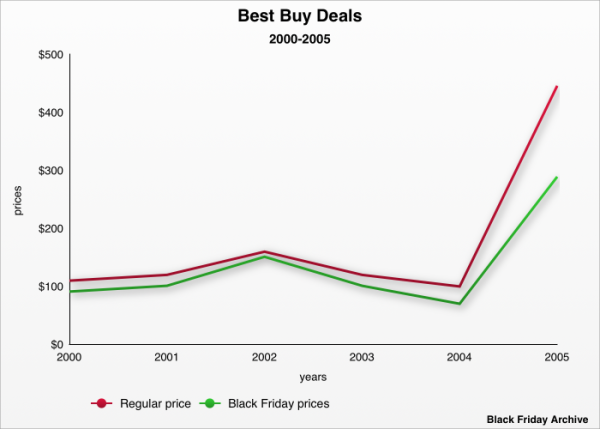
As this was happening, the internet was also coming to prominence, and with it, shoppers could more easily track prices. What many found was that their Black Friday deals were only deals in name only. Take Best Buy—tech items are some of the most sought-after during Black Friday, so Best Buy makes for a great test case. Using data from the Black Friday Archive, a website that saves ads from 1963 to now, the average discount a person got at Best Buy on Black Friday between 2000 and 2004 was just around $20.
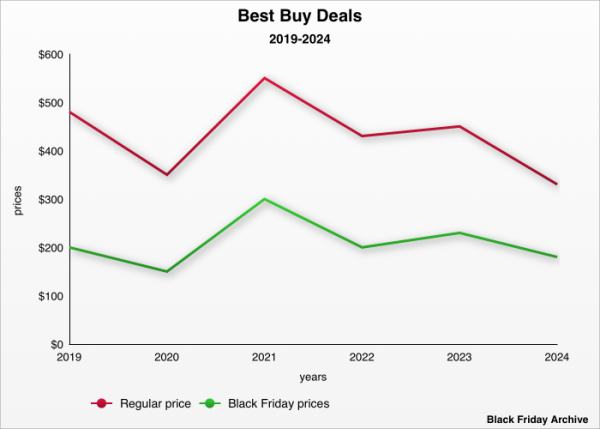
After consumer protests in the form of fewer customers buying on Black Friday, major retailers told consumers that they were correcting the course. Major retailers stopped opening on Thanksgiving Day and started offering bigger savings. This chart shows that Best Buy marks down products by around 50% now.
But if the retailers made so many changes, why does it feel like the best years of Black Friday are still behind us?
It might have to do with the internet.
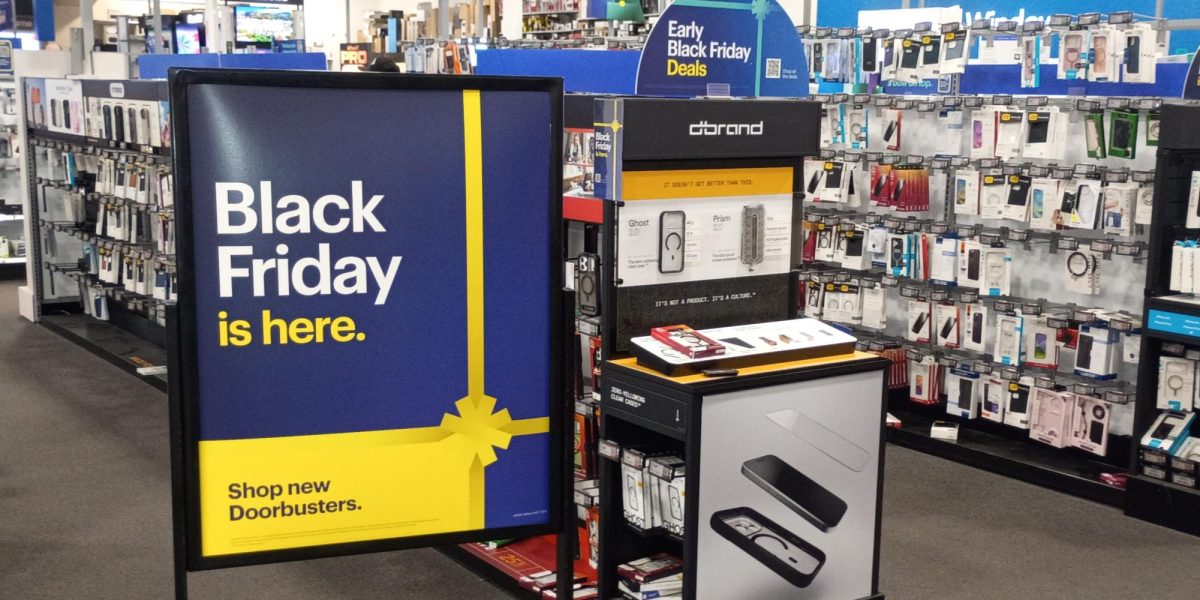
How the Internet Killed Black Friday
Black Friday rose to prominence before 2010, back in the days when not every retailer had online ordering and Amazon only sold books. In 2010, however, retailers with online shops started noticing a large spike in digital sales on the Monday after Black Friday. Shoppers that missed out on a Black Friday item would search for something else online. Why wait until Monday? Not everyone had high-speed internet access at home back in 2010, so these consumers were using the internet at work.
Retailers turned this into another “holiday” called Cyber Monday. While businesses initially had a different set of Black Friday deals and Cyber Monday deals, most have found it easier to just extend Black Friday discounts to Monday, which turned Black Friday into a Black Long Weekend. Customers no longer had to stand outside a door for hours, and businesses no longer had to open on Thursday.
As more consumer spending has moved online, especially in the wake of the COVID lockdowns, consumers want all the luxuries of their usual online shopping experience to apply to Black Friday. If an item runs out in store, it can be ordered online for the same price. If the item bought on Black Friday becomes cheaper later in December, stores now offer price match guarantees. Some stores will even deliver your Black Friday purchases to your house for you.
Stores are doing whatever they can to offer convenience to customers to keep customers from going to Amazon, their largest competitor. But they’re thinking about this all wrong: what made Black Friday exciting and fun was the lack of convenience. Take a look at this video from On Demand News in 2000 showcasing a store in Texas in all its Black Friday glory:
That’s not convenient at all. That’s beautiful chaos.
Let’s Make It Messy
The inconvenience is the heart of the true Black Friday experience. You want that great deal? You better get up at 3 in the morning. Did the store run out of that special item you wanted? Tough luck—you better drive like mad to another store that opens an hour later. Worried about fitting everything in your basket (or even car)? You need to get your squad together with a game plan to hop from aisle to aisle and store to store.
Sure, this wouldn’t be everyone’s ideal shopping experience, but that’s the point. Black Friday shouldn’t be for everyone—it’s for the planners, the deal hunters, and those who get an adrenaline rush from trying to win. It’s the same drive that makes athletes want to cross the finish line and gamblers want to roll the dice one more time. It was never just about the savings—it was about the thrill.
Retailers need to bring Black Friday back to how it used to be. No extended sales through the weekend. No price matching or reserving items online once they run out. Make customers wait in line. Make them wake up before dawn. Make them earn their discount.
Black Friday without Black Eyes
Despite this, it can’t be ignored that one reason that stores extended Black Friday hours and inventory was due to violence. When people are fighting for deals, some will actually fight–this was the entire plot of Eli Roth’s Thanksgiving movie. Since 2006, 17 people have died and 125 have been severely injured during Black Friday events according to Black Friday Death Count. Incidents of harm reached a peak in 2013, but there hasn’t been a death or injury reported since 2021. Black Friday may not be exciting anymore, but at least it’s not deadly.
However, a closer look at the stats show that 12 of the 17 deaths, including all deaths after 2013, were shootings. As we’ve seen with the Aurora theater shooting in 2012, the King Soopers shooting in 2021, and the hundreds of school shooting that happen each year, shootings at large public gatherings are a larger cultural concern and not just a feature of Black Friday.
Of the other five deaths and many of the injuries listed in the stats, most are caused by trampling, brawling, and traffic accidents caused by waking up too early. All three of these problems have easy solutions that can still keep the integretity of an exciting Black Friday. Trampling can be solved by a police or security presence at the doors ensuring that customers are in an orderly line and letting them in in waves of 8-10 at a time–this is a solution several stores took after an 11-year-old girl was trampled in Michigan Walmart in 2011. That increased police prescence could also stay in the parking lot once the store opens, as most shootings and other violent interactions happen in parking lots and not the stores themselves.
While brawling and traffic accidents cannot be completely eliminated, they can be prevented. Stores can post reminders through their stores that they are being recorded by security cameras and that any fighting will not be tolerated. Stores could also run a list of Black Friday tips in their ads to remind shoppers to not drive while tired and that any physical altercation will result in being banned from the store. Stores opening at 5 a.m. and 6 a.m. instead of midnight will also help prevent Black Friday car accidents.
Gen Z and Alpha Are Black Friday’s Future
With the issues of harm solved, retailers should return to the inconvient chaotic Black Friday for one very important reason: it’s something they can offer that Amazon cannot.
Ordering off Amazon will always be easier and cheaper than going to a store, so stores need to lean in to what Amazon can’t offer, and that’s an experience. Play up the idea that store deals will not be online. Appeal to those that want the bargain hunt instead of the online-only shoppers that will never leave Amazon. Use advertizing to make customers believe that a store-bought gift and braving a Black Friday crowd is more meaningful than something bought with one click.
Retailers, you’re at a critical juncture. My generation doesn’t want stuff as much as a story to tell–that’s why we unbox our purchases on TikTok and look for experiences that others would find cool. Black Friday shopping, real Black Friday, gives us a fun story to post and a reason to go to a store instead of buying online.
Our generation brought back wide-legged jeans. We brough back film cameras. We even brought back Peggy Hill. Now is the time to go back to Black Friday.