

















On December 4, Netflix announced that they had locked down a deal with Warner Bros. Discovery to buy most of the company for $72 billion plus a $5 billion retainer to pay for the costs of the acquisition.
This is our fourth article exploring the Warner-Netflix deal. On Monday, we looked at what exactly the Warner Bros.-Netflix deal is and what Netflix is and isn’t buying. On Tuesday, we looked at how the sale benefits Warner Bros., and yesterday, we looked at how the sale benefits Netflix.
Today, we’ll look at the major downsides of the deal that have been shared by the Hollywood unions, professionals in Hollywood, published media, and Hollywood vloggers. We’ll look at which arguments are overblown, which are not factual, and what are the genuine concerns (and how Netflix will likely address the issues).
“This will be the death of the theatrical experience!” (It’s Not)
That’s what a guest column in The New York Times proclaims. As does a headline in Deadline. Digital Spy asks if the deal is the “death of Hollywood,” as do The Guardian and Vanity Fair. Perhaps most cynically, Variety used an article headline on Friday to ask its readers, “Is Netflix Trying to Buy Warner Bros. or Kill It?”
Hollywood has a right to be concerned. Theatrical exhibition has been in the worst place it’s ever been. Movie theaters were some of the first places closed during the 2020 COVID pandemic, they were slow to reopen, and audiences still haven’t come back to pre-pandemic levels.
A big reason for this is streaming—with theaters closed, studios held a lot of same-day releases for theatrical and streaming during 2020 and 2021. Afterward, the 90-day “theatrical window” before movies dropped on home media has been shrunk to 45 days or less. In theory, this drives down audience desire to go to the theaters as a month-and-a-half isn’t too long to wait for a movie to come to streaming.
Netflix is an advocate for shorter theatrical windows: in a call to investors on December 5, Netflix CEO Ted Sarandos said that he believes that theatrical “windows will evolve to be much more consumer friendly, to be able to meet the audience where they are quicker.” The films that Netflix does run in theaters, like Guillermo del Toro’s Frankenstein and Rian Johnson’s Wake Up Dead Man, are at limited locations, last only for a week or two, and are usually just to make the film eligible for awards. The industry is worried that Netflix will push this model onto all Warner Bros. films.
However, on a call with Wall Street financers on December 8, Sarandos made clear that Warner Bros. Pictures would not be pulling out of the theater business: “If we did this deal 24 months ago, all those movies we saw this year do so well for Warner Bros. would have been released in the same way in theaters. I’m talking about Minecraft, I’m talking about Superman, I’m talking about Weapons, I’m talking about Sinners [. . .] It’s really important the way [theatrical releases] create and the way they drive value. We didn’t buy this company to destroy that value.”
In that same call, Sarandos clarified his past comments about Netflix not being in the business of releasing films in theaters by making clear that “when this deal closes, we are in that business.” Sarandos emphasized that the transaction is driven by wanting to diversify their business. He said, “we pick up three business we’re not currently in, so we have no redundancies [. . . ] One of them is a motion picture studio with a theatrical distribution machine.”
In reality, the Netflix-Warner deal may bring more films to theaters. As a streaming-first company, Netflix has struggled to partner with theaters to exhibit their movies—the top three chains (AMC, Regal, and Cinemark) shut out Netflix for years and have only allowed Netflix to hold “special event” screenings like the K-Pop Demon Hunters Sing-Along and the upcoming Stranger Things finale. However, these theaters won’t say no to Warner Bros. films, and it’s likely that Netflix will use WB to get its foot in the door to more theatrical exhibition. Given that K-Pop Demon Hunters topped the box office for a week in August and netted Netflix $18 million in ticket sales, it’s highly unlikely that Netflix will just forgo those box office profits.

“Netflix will kill HBO!” (It Won’t)
When Ted Sarandos said that Netflix was picking up three businesses they aren’t currently in, he mentioned that one was theatrical exhibition and distribution. The other two are a television production and distribution studio with Warner Bros. Television and a prestige television service with HBO.
Netflix has already told WBD that they don’t want actual television stations; instead, all their “linear television” projects like Abbot Elementary, George and Mandy’s First Marriage, The Voice, The Bachelor in all its forms, and wherever The Real Housewives go next will be licensed for broadcast on ABC, CBS, NBC, and so on. Since this is pretty much how WB TV already operates, this aspect of the deal has faced no real criticism.
HBO, however, is different: Netflix is keeping all the HBO cable networks. Netflix wants not just profit and popularity but also prestige. HBO has a storied history as a premium network, so Netflix wants to use the HBO brand and name to start winning awards and the respect of the Hollywood insiders who… well, have been writing all of these “Netflix will kill Hollywood” think pieces.
Netflix has made this clear by stating that they will not dissolve HBO Max into Netflix but will keep it as a separate service. Furthermore, Netflix is going to realign what shows are part of HBO Max and Netflix—according to John Campea, WB insiders say Netflix will be the family-friendly, four-quadrant franchise streamer, while HBO Max will focus on prestige drama, comedy, documentary, and political shows like Last Week Tonight with John Oliver and Real Time with Bill Maher.
The goal here will be to give each streaming service a specific identity and appeal. Ever since Discovery bought Warner Bros., HBO Max has been a hodgepodge of genres: adult HBO dramas like Euphoria sit beside Teen Titans GO!, My 600 lb. Life, Alien Encounters: Fact or Fiction, live college basketball, and Sesame Street.
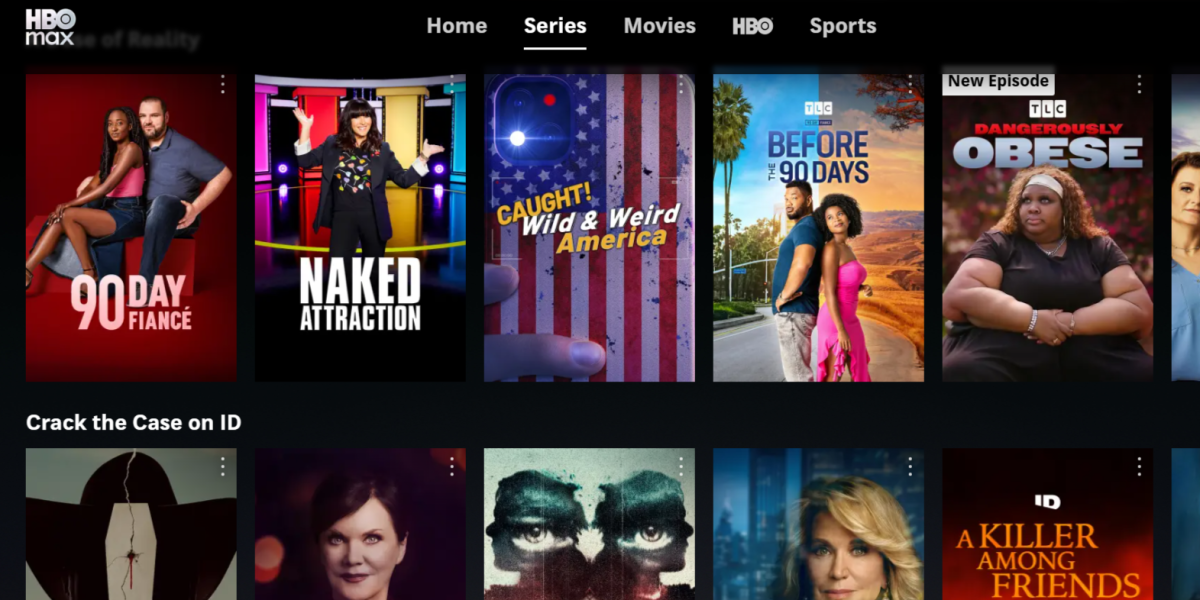
Netflix too has had the same problem, lumping CoComelon and Outer Banks with Adolescence and Baby Reindeer. If Netflix gets this acquisition, HBO will have all of both Netflix’s and WB’s prestige and premiere programming, while Netflix will have all the reality shows, casual TV, and popular franchises like DC and Looney Tunes.
Each streamer will also be governed by different philosophies. Netflix has been and will continue to be centered on the performance algorithms that have been widely criticized by creatives, especially after Netflix released guidance that shows should be written so the audience can do something else while watching. However, HBO, like Warner Bros. Pictures, will keep the people currently running things in place and house more creative-driven projects. Rather than turn HBO into “Netflix slop,” Netflix wants HBO to elevate them out of their reputation for forgettable, low-quality programming.
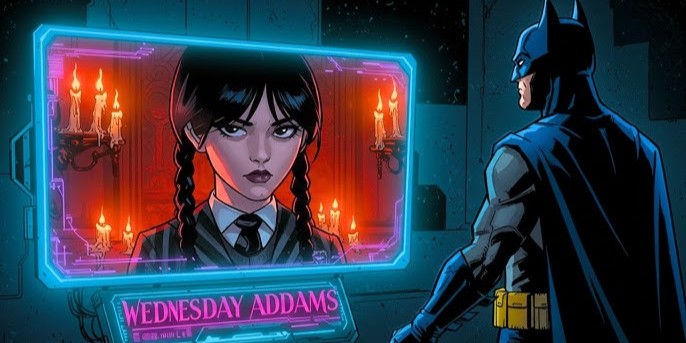
That said, another massive streamer once had a merger and gained a second streaming service. The streamer said that they would keep the second service as a standalone for their Emmy-winning series and adult-oriented fare, but five years later, Disney+ will complete absorb Hulu. This seems less likely in the case of Netflix-HBO because HBO is a more historic and beloved brand than Hulu, but there is a scenario where HBO Max won’t disappear right away but slowly fade. Still, this merger won’t instantly have crazy AI-recommended IP team-ups like Batman solving a mystery with Wednesday Addams.
“This merger will create a monopoly!” (It Doesn’t)
The main issue that those outside the movie business and in the business… uh, business are concerned about is that the acquisition will turn Netflix into a monopoly. Both actress-turned-activist Jane Fonda and Senator Elizabeth Warren have warned that this deal would create a Hollywood monopoly where Netflix could set streaming and ticket prices however high they want, freeze out workers they don’t like, kill competition at the box office, and become an indomitable force in the entertainment industry.
A lot of this fear involves the streaming business. Various reports have said that Netflix and HBO Max combined would put the number one and number four streamer under the same ownership. However, these are based on subscriber numbers and streaming service revenue. If instead the streamers are evaluated by the amount of watchtime from their audience, HBO Max is low compared to its subscriber count. According to Nielsen, HBO Max has around 3% of market share for streamer watchtime month-to-month in 2025. While Netflix has a healthy 17.5%, it would only have 20% of the streaming market with HBO Max, which hardly makes it a monopoly.
Furthermore, Netflix isn’t even the top streamer when it comes to watch time or profit: YouTube is. YouTube and Amazon Prime Video are who Netflix sees as its primary competition, but these two companies are typically left out of the discussion of streaming monopolies because of their different methods of monetization. However, understanding this is vital to Netflix’s perspective that it is not currently a Hollywood studio (and that will change with acquiring WB) nor will it be large enough in the streaming space to create a monopoly.
Speaking of the studio side, the monopoly argument falls flat. Netflix has stated that they intend to keep everything about Warner Bros. Pictures, including its theatrical releases, the same—this means that the theater business will remain just as competitive as it is now. While Warner Bros. would absorb the share of Netflix’s box office returns, this is insignificant: so far this year, WB has 23.25% of the theatrical market share while Netflix has just 0.34%, and even when both are added, they are still behind Disney-Fox.
Disney-Fox, by the way, is Netflix’s main argument for why they should be allowed to acquire WB without it being a monopoly concern. Disney acquired Fox in 2019, and while industry groups claim that it was bad for Hollywood, the two companies were allowed to combine despite having more market share, more overlapping business interests, and more assets than Netflix and Warner Bros.
Netflix’s other big defense against monopoly accusation is simple and syllogistic but effective: would the same voices calling this a monopoly be opposed to it if Warner Bros. was buying Netflix? If not, then their apprehension isn’t business-focused but something else.
Those who view Disney-Fox as a mistake or worry that Netflix won’t stick to what it’s publically shared as its plans for WB shouldn’t block the merger but legally bind Netflix to, say, not cut the number of projects that go to theaters or dissolve HBO Max into Netflix. Directors like Del Toro and Johnson can also continue to only work with Netflix-WB if they are guarenteed a certain number of weeks in a certain number of theaters, or even a home release on Blu-Ray. Speaking of which…
“This will be the death of physical media!” (It’s Already Dead)
In 2023, Warner Bros. released a slew of old remastered films on 4K and Blu-Ray to celebrate 100 years as a studio. More than other Hollywood studios, Warner Bros. has the reputation of valuing physical media release. Meanwhile, Netflix rarely releases its shows or movie on 4K or Blu-Ray because it directly clashes with their business model.
This has some critics wanting the merger blocked because they believe Netflix will stop all future WB physical media releases, which will put the final nail in the coffin for home media. However, the demand for home media died long ago. Over the past five years, retailers like Best Buy and Target stopped carrying physical media in stores, and the market dipped below $1 billion for the first time since the 1980s.
However, in the past year, physical media has seen a rise in popularity because of streaming services. Streamers, including Netflix and HBO Max, have been criticized over the past couple of year for pulling very popular films and series off their service, which made them completely unavailable to consumers. This has resulted in a resurgence of physical media, especially among Gen Z.
While Netflix has a historical anthama toward physical media, this will change after acquiring Warner Bros. for two reasons. One, Warner Bros. partnered with Universal Studios in 2020 to create the business Studio Distribution Services, which creates DVD, Blu-Rays, and 4K discs for both companies. Whether Netflix likes it or not, Warner Bros. is contractually obligated to release all their theatrical releases and a certain number of library shows and films every year until 2030.
Beyond 2030, Netflix will likely continue home media releases for different reason: piracy. Online media piracy has surged in 2025, with a significant number turning to illegal streaming because they have no legal means to access a show or movie that has been pulled from every streamer. As Netflix grows older and pulls more of its library titles off the service out of necessity, they may see the advantage in having home media alternatives to keep their customers happy.
With their expansion of their Netflix Houses, Netflix will even have an ideal place to stock and sell their physical media. They could also continue the Warner Archive, which produces home media titles on demand through their own website (which would prevent money going to their competitor Amazon).
While this might not allay every concern about the merger, Netflix buying Warner Bros. may be the best option available. In shifting into opinion, we’ll look at that in the fifth part of our series of articles on the Warner Bros.-Netflix deal:
- On Monday, we looked at what the Warner Bros.-Netflix deal exactly is
- On Tuesday, we looked at why Warner Bros. is up for sale in the first place
- On Wednesday, we looked at why Netflix wants to buy Warner Bros.
- Today, we’ll examine the rumored downsides of the deal (and what the real concerns are)
- On Friday, we’ll look at who is trying to stop the deal (and if they may succeed)