














On December 4, Netflix announced that they had locked down a deal with Warner Bros. Discovery to buy most of the company for $72 billion plus a $5 billion retainer to pay for the costs of the acquisition.
This is our third article exploring the Warner-Netflix deal. On Monday, we looked at what exactly the Warner Bros.-Netflix deal is and what Netflix is and isn’t buying. Yesterday, we looked closer at Warner Bros. and their motives for selling their company. Today, we’ll look at the other party in the transaction: let’s dive into Netflix as a business and why they want Warner Bros.
The Story Behind Netflix
In 1997, over a century after the Warner brothers came to America, marketing expert Marc Randolf teamed with software developer Reed Hastings on a bold idea to revolutionize the home movie business. Randolf, who started his career direct-mailing sheet music to subscribers, thought DVD rental through the mail could be profitable in areas without a local video store. The two bought up copies of nearly every film currently released on the then-new DVD technology, and Hastings built a website where customers could order their rental called Netflix.
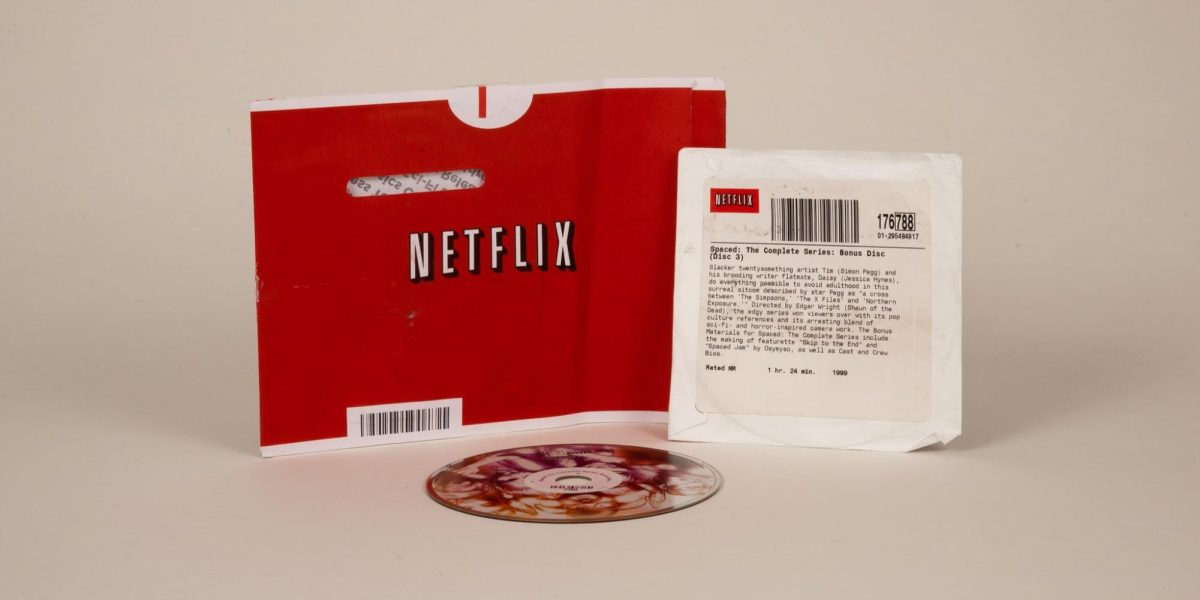
The business took off quickly. In 1999, Netflix stopped their video store model of charging customers per rental and introduced a flat fee per month for a subscription to their service. Business slowed after the dot-com bubble burst in 2000 but gained renewed interest after the September 11 attacks in 2001 as people became less likely to go out to public places. In 2003, the company became profitable, and after witnessing the rise of YouTube, the founders set their eyes on a new goal: eliminating the mail business entirely and streaming movies directly to users.
In 2008, Netflix offered all subscribers digital rentals along with disc rentals. Two years later, Warner Bros. made a deal with Netflix to stream their new movies for a discounted price as long as they delayed streaming and rental until 28 days after release to promote physical media sales. This soon became the norm for all studios. Netflix teamed with Paramount, Lionsgate, and MGM in 2010 to offer their films and TV libraries to its subscribers for three years—after this deal expired, Netflix signed a 2013 distribution deal with Warner Bros. that gave it access to all Cartoon Network shows, CW/WB titles, and Warner TV library titles like Friends and Seinfeld—these titles drove a huge increase in traffic to Netflix.
2013 also saw Netflix’s first hit with original content with House of Cards. Around 60% of Netflix US is currently original movie and TV content, with its biggest titles including Orange is the New Black, Stranger Things, Squid Game, and Wednesday. In 2015, Netflix released its first film in a few theaters while it was available on its service (Beasts of No Name), and it won its first Oscar outside the documentary category in 2018 when Roma took home Best Picture.

The Problem with Netflix
Roma was a seismic shift for Hollywood. Several Hollywood directors, including Stephen Spielberg, said streaming films should be eligible for Academy Awards. AMC Theaters and Regal Cinemas refused to play Roma during its Oscar campaign because Netflix wouldn’t wait until 90 days after a film was out of theaters before allowing it to be streamed.
At the same time, almost every major Hollywood studio developed their own streaming service. Disney developed Disney+, Fox and NBC-Universal developed Hulu (and after Disney and Fox merged, NBC-Universal created Peacock), Paramount developed CBS All-Access (later Paramount Plus), and Warner Bros. turned HBO Now and HBO Go into HBO Max. Only Sony (which owns Columbia Pictures) doesn’t have their own streamer and licenses most of their films to Netflix. Netflix also saw dozens of smaller competitors like YouTube Red, PlutoTV, Vudu, Crackle, Shudder, Roku TV, Apple TV+, and Amazon Prime Video.
The competing streamers started to take their films and television series off Netflix, so Netflix began an aggressive campaign of buying up whatever they could from film festivals, foreign creators, and those that couldn’t sell their ideas to other studios. Some of these became critical and audience hits like The Haunting of Hill House, Bird Box, Glass Onion, The Irishman, and Marriage Story. However, the service also got saddled with expensive flops like The Ridiculous Six, Jupiter’s Legacy, The Dark Crystal reboot, and The Electric State.
This all has given Netflix an identity crisis—namely, that it has no real identity. Half of its content is only temporary and may be gone any day. As for their Netflix originals, most have no built-in audience and have to be aggressively marketed to get views. Even the few franchises with preexisting fan bases, like Wednesday and The Summer I Turned Pretty, need heavy promotion because Netflix puts out so much that good and even great projects can get lost. With just a handful of IP characters instead of a large stable, the few that catch on culturally are at a greater risk of overexposure—for example, once Stranger Things Season 5 finishes, Netflix plans to create an animated Stranger Things series and a Nancy Wheeler spinoff.
Why Netflix Needs Warner Bros.
Netflix is on top of the streaming game but needs to constantly pump out new shows and movies to keep their spot. Warner Bros. not only gives them a 100-year-old library of shows and films they can add to their service. Netflix can start building a consistent identity off already beloved brands like the Looney Tunes, Hanna-Barbera, Cartoon Network, and Adult Swim. They also have hundreds of intellectual properties that they can develop into new and exciting projects that appeal to existing fans.
Not every Warner Bros. show and movie will go straight to Netflix, though, because they are keeping HBO Max. The existence of a sister streamer to Netflix is actually a benefit for the company, as the two brands can differentiate their offerings. HBO already has a storied reputation for high-quality and mature media, so Netflix can use HBO as its platform to appeal to critics and cinephiles while it can use its main service for casual and family offerings.
Another reason that Netflix surely wants to keep the HBO brand is prestige. Netflix wants to be taken seriously by other Hollywood studios and doesn’t want a bias against them as a streamer when it comes to Oscars, Emmys, and Golden Globes. By owning one of the oldest and most established studios in the industry, Netflix can get the industry acceptance they want. Amazon just pulled off this same trick by acquiring MGM and branding all their originals as from Amazon MGM Studios.
Speaking of Amazon, buying Warner Bros. gives Netflix diversity as a business. Currently, Netflix has only one real income stream: its streaming. Warner Bros. has several income streams: theatrical box office, archive licensing, gaming, print media and comics, theatrical performances, theme park licensing, and even studio tourism. While there are a few Netflix titles with merchandise deals and physical media releases, Warner Bros. has an entire studio store and decades-long partnerships with major brands.
This last point does hit on an unknown about the deal, though: will Warner Bros. films still come out on Blu-ray and physical media, or will Netflix dissolve that part of the business and continue their practice of rarely releasing physical media? We’ll look at that in the fourth part of our series of articles on the Warner Bros.-Netflix deal:
- On Monday, we looked at what the Warner Bros.-Netflix deal exactly is
- Yesterday, we looked at why Warner Bros. is up for sale in the first place
- Today, we looked at why Netflix wants to buy Warner Bros.
- On Thursday, we’ll examine the rumored downsides of the deal (and what the real concerns are)
- On Friday, we’ll look at who is trying to stop the deal (and if they may succeed)