




















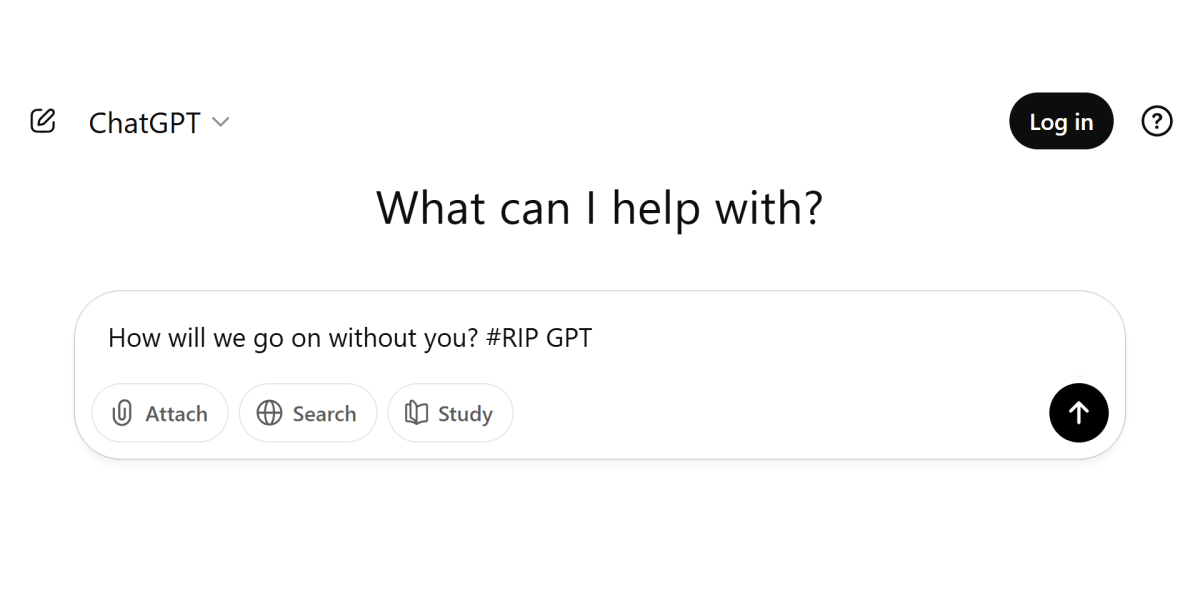
On November 13, students throughout Frederick High let out a collective gasp. Some shook their heads in disbelief, many cursed, and a few even cried.
The district filter had blocked ChatGPT.
For those who don’t know, ChatGPT is a generative artificial intelligence chatbot that is capable of performing a wide array of tasks. It answers questions. It writes essays. It collects research. With its Sora integration, it can even generate realistic photos and videos.
Since the site can do pretty much anything a teacher asks a student to do, ChatGPT was the go-to website for most Frederick students. While its results weren’t perfect and some teachers said it was plagiarism, use of ChatGPT was widespread until that fateful Thursday.
Now, when students try to access it from their iPads, a page with an ugly cartoon gnome gnawing on a cable pops up and says, “Looks like this page isn’t allowed.” This is the landing page when a site is blocked by Securly, the new district web filter that has caused a lot of frustration among students and teachers.
Our news staff, which has all grades from freshmen to seniors, all tried logging into ChatGPT on the school network, and none of us were granted access. We all got the gnome.
SVVSD and Securly have blocked hundreds of other websites as well: social media platforms like TikTok and Instagram, online gaming sites, video and audio streaming services like Netflix and Spotify, and (obviously) adult content.
However, ChatGPT is different because the district says it supports AI integration in the classroom. They’re hosting an AI summit for teachers in February and have put on a Day of AI student event at the Innovation Center every year since 2023. So why block ChatGPT?
Well, they didn’t.
According to the District Technology Services Help Desk, whom we called to investigate this story, DTS didn’t block the site, and, as far as they can tell, there is still student access. Our help desk person directed us to Securly’s Site Lookup Tool, where a student or teacher can put in a website and district email to see if a site is blocked. We tried this, and…
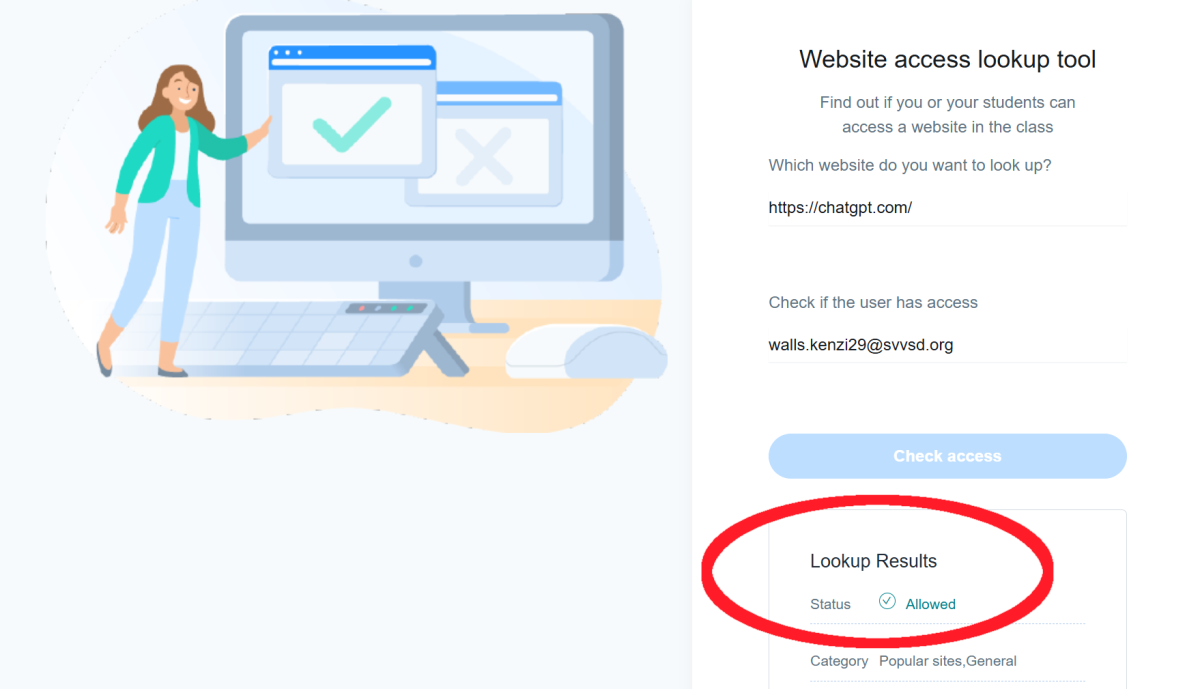
…DTS is right—it says that student access to ChatGPT is still allowed.
But it isn’t.
Something very strange is going on, and as of writing, DTS has not followed up with us on what the issue is, let alone if it will be fixed. This may not even be that ChatGPT is an AI platform that is the problem—this could actually be a student data issue.
To comply with the Colorado Student Data Transparency and Security Act, SVVSD strictly monitors for any app or site that would collect private student information and sell it to third parties. Not only has it blocked dozens of sites because their data collection would compromise student security, but also it has blocked apps and sites that were once allowed and even recommended if that company changes its data terms and conditions to something that would put student security at risk.
This may have happened with ChatGPT. A day before the Great GPT Blockage, ChatGPT updated GPT-5 to GPT-5.1 and changed certain types of account features. Since signing into a GPT account is tied to a user’s name and age, any changes in how accounts work and what data is tracked need to be evaluated for compliance with Colorado and federal law. The filter may have preemptively blocked the site until it could be reviewed, or, if other school districts reported that the new GPT violated student privacy laws, blocked the site for every district using Securly.
Until DTS has answers, students still have access to AI tools through Google Gemini and the SchoolAI app in Classlink, both of which are district-supported. Just not ChatGPT. While some students may be sad that their favorite homework helper is blocked, it’s good to be able to get used to new tools in a time where tech companies start and disappear all the time.